Animals of Northern New York
  • Home
  • Amphibians
    • Frogs and Toads >
      • American Toad
      • American Bullfrog
      • Common Gray Treefrog
      • Green Frog
      • Mink Frog
      • Northern Leopard Frog
      • Pickerel Frog
      • Spring Peeper
      • Wood Frog
    • Salamanders >
      • Blue-Spotted Salamander
      • Eastern Newt
      • Northern Red-Backed Salamander
      • Northern Two-lined Salamander
      • Spotted Salamander
  • Birds
    • Blackbirds >
      • Bobolink
      • Common Grackle
      • Red Winged Blackbird
    • Doves >
      • Mourning Dove
    • Flycatchers >
      • Eastern Phoebe
      • Eastern Kingbird
    • Grosbeaks & Sparrows >
      • American Tree Sparrow
      • Chipping Sparrow
      • Dark-Eyed Junco
      • Northern Cardinal
      • Song Sparrow
      • White-Throated Sparrow
    • Gulls >
      • Ring-Billed Gull
    • Herons >
      • Green Heron
      • Great Blue Heron
    • Jays & Crows >
      • American Crow
      • Blue Jay
    • Mimic Thrushes >
      • Gray Catbird
    • Raptors & Owls >
      • American Kestrel
      • Red-Tailed Hawk
      • Turkey Vulture
    • Swallows >
      • Barn Swallow
      • Tree Swallow
    • Thrushes >
      • American Robin
      • Eastern Bluebird
      • Veery
    • Waterfowl & Gamebirds >
      • Canada Goose
      • Mallard
      • Ruffed Grouse
      • Wood Duck
    • Waxwings >
      • Bohemian Waxwing
      • Cedar Waxwing
    • Wood Warblers >
      • Chestnut Sided Warbler
      • Common Yellowthroat
      • Yellow Warbler
    • Wrens, Woodpeckers & Kin >
      • Black-Capped Chickadee
      • Downy Woodpecker
      • Hairy Woodpecker
      • Northern Flicker
      • House Wren
      • Yellow-bellied Sapsucker
  • Insects & spiders
    • Insects >
      • European Praying Mantis
      • Bees, Wasps, & Ants >
        • Bumble Bees
        • Honey Bee
      • Dargonflies & Damselflies >
        • Eastern Pondhawk
        • Twelve-Spotted Skimmer
      • Flies & Kin >
        • House Fly
        • Green Lacewing
      • Moths & Butterflies >
        • Luna Moth
        • Monarch
        • Mourning Cloak
      • True Bugs >
        • Pale Green Assassin Bug
        • Jagged Ambush Bug
    • Spiders >
      • Banded Garden Spider
      • Black and Yellow Garden Spider
      • Goldenrod Crab Spider
      • Long-bodied Cellar Spider
      • Six-Spotted Orb Weaver
  • Mammals
    • Common Muskrat
    • Eastern Chipmunk
    • Eastern Cottontail
    • North American Porcupine
    • White - Tailed Deer
  • Reptiles
    • Snakes >
      • Eastern Garter Snake
      • Eastern Milksnake
      • Red-Bellied Snake
    • Turtles >
      • Common Snapping Turtle
      • Painted Turtle
  • Glossary
  • Pileated Woodpecker

Eastern Bluebird

Picture
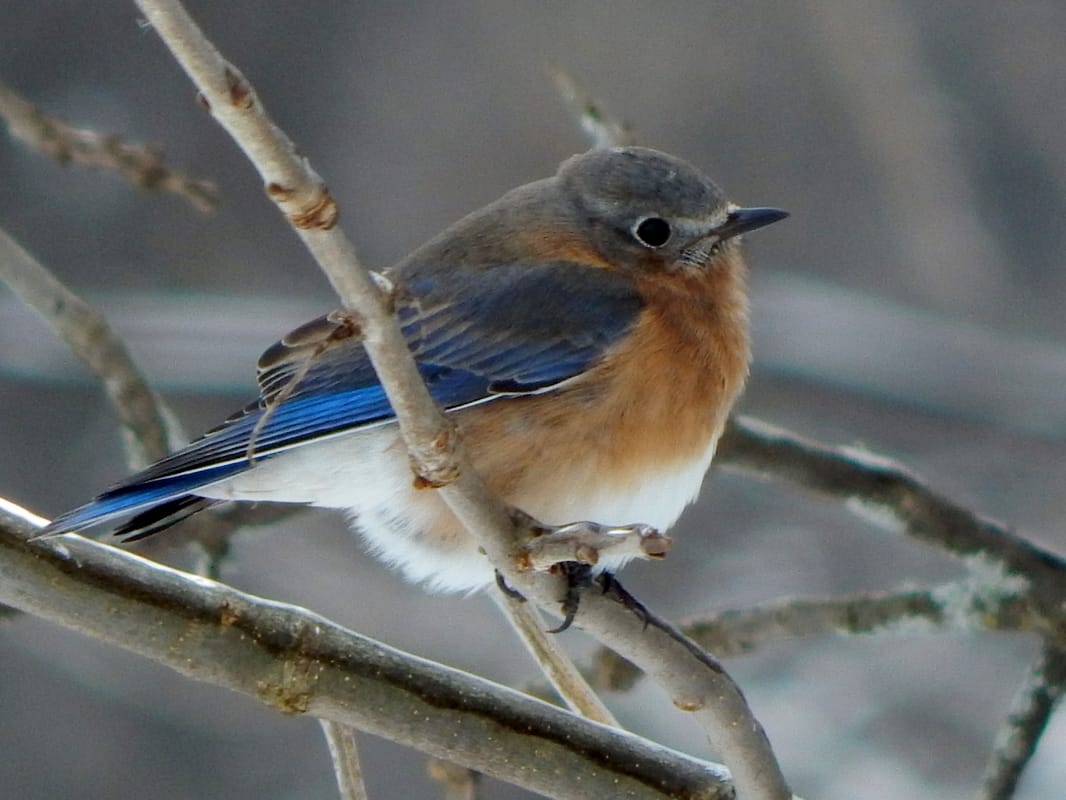
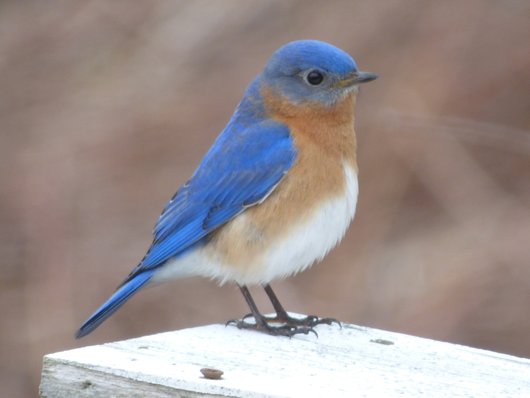
Description: Male: bright blue back and orange breast. Belly is white. Female: is duller with brown and blue above and a fainter colored breast. Juvenile: Blue on wings, body is heavily marked and barred with brown.

Nest: Grasses and weed stems make up most of the nest. Somewhat messy looking, it is made in a tree cavity, woodpecker hole or bird box.

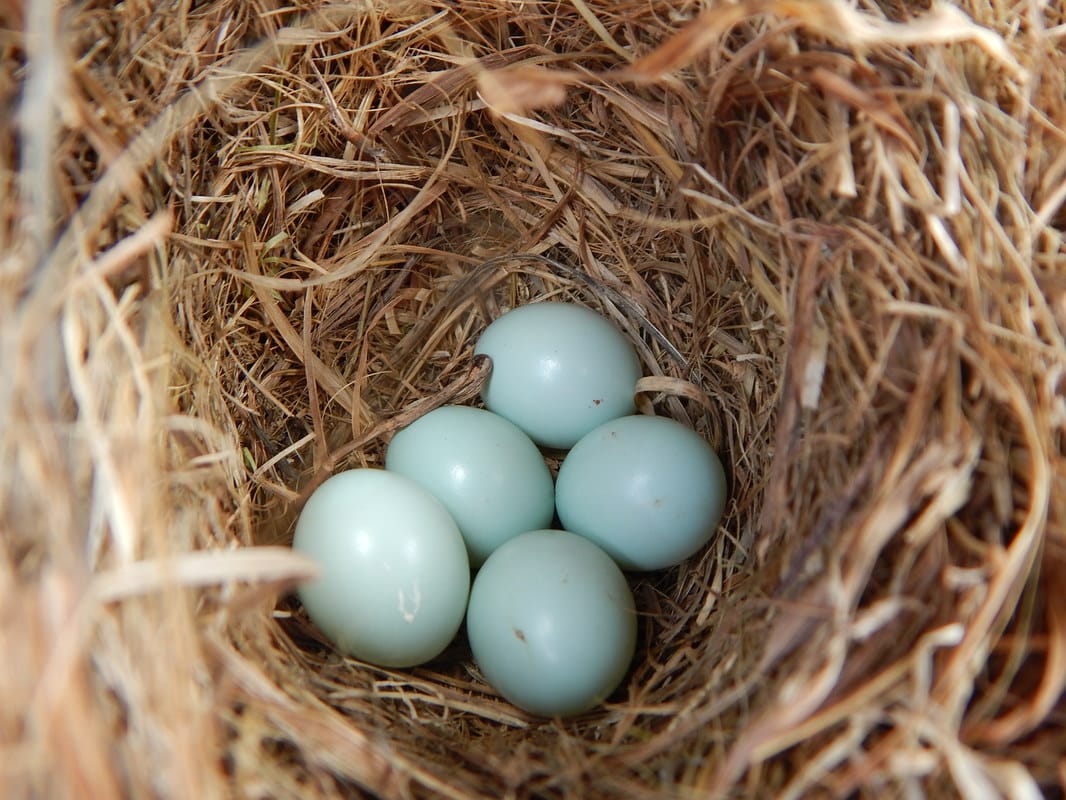
Eggs: 3-7 bluish white eggs. 

Diet: Mainly insects and fruit. Grasshoppers, caterpillars, moths and beetles make up the bulk of the diet, but many other insects if available are fair game. They will consume fruit most in early spring and fall. 

Habitat: Open areas, fields, and sometimes urban settings. Small migrating flocks are often heard or seen flying overhead in early spring and late fall/early winter. They will frequently visit nest boxes during migration, likely checking out possible nesting sites for the following breeding season. They can be attracted with fall fruiting shrubs, as well as plants with winter persistent fruits. They will come to meal worm feeders and can be attracted with bird boxes.     
 

Picture
Picture
Eastern Bluebird (Female)
Powered by Create your own unique website with customizable templates.