Animals of Northern New York
  • Home
  • Amphibians
    • Frogs and Toads >
      • American Toad
      • American Bullfrog
      • Common Gray Treefrog
      • Green Frog
      • Mink Frog
      • Northern Leopard Frog
      • Pickerel Frog
      • Spring Peeper
      • Wood Frog
    • Salamanders >
      • Blue-Spotted Salamander
      • Eastern Newt
      • Northern Red-Backed Salamander
      • Northern Two-lined Salamander
      • Spotted Salamander
  • Birds
    • Blackbirds >
      • Bobolink
      • Common Grackle
      • Red Winged Blackbird
    • Doves >
      • Mourning Dove
    • Flycatchers >
      • Eastern Phoebe
      • Eastern Kingbird
    • Grosbeaks & Sparrows >
      • American Tree Sparrow
      • Chipping Sparrow
      • Dark-Eyed Junco
      • Northern Cardinal
      • Song Sparrow
      • White-Throated Sparrow
    • Gulls >
      • Ring-Billed Gull
    • Herons >
      • Green Heron
      • Great Blue Heron
    • Jays & Crows >
      • American Crow
      • Blue Jay
    • Mimic Thrushes >
      • Gray Catbird
    • Raptors & Owls >
      • American Kestrel
      • Red-Tailed Hawk
      • Turkey Vulture
    • Swallows >
      • Barn Swallow
      • Tree Swallow
    • Thrushes >
      • American Robin
      • Eastern Bluebird
      • Veery
    • Waterfowl & Gamebirds >
      • Canada Goose
      • Mallard
      • Ruffed Grouse
      • Wood Duck
    • Waxwings >
      • Bohemian Waxwing
      • Cedar Waxwing
    • Wood Warblers >
      • Chestnut Sided Warbler
      • Common Yellowthroat
      • Yellow Warbler
    • Wrens, Woodpeckers & Kin >
      • Black-Capped Chickadee
      • Downy Woodpecker
      • Hairy Woodpecker
      • Northern Flicker
      • House Wren
      • Yellow-bellied Sapsucker
  • Insects & spiders
    • Insects >
      • European Praying Mantis
      • Bees, Wasps, & Ants >
        • Bumble Bees
        • Honey Bee
      • Dargonflies & Damselflies >
        • Eastern Pondhawk
        • Twelve-Spotted Skimmer
      • Flies & Kin >
        • House Fly
        • Green Lacewing
      • Moths & Butterflies >
        • Luna Moth
        • Monarch
        • Mourning Cloak
      • True Bugs >
        • Pale Green Assassin Bug
        • Jagged Ambush Bug
    • Spiders >
      • Banded Garden Spider
      • Black and Yellow Garden Spider
      • Goldenrod Crab Spider
      • Long-bodied Cellar Spider
      • Six-Spotted Orb Weaver
  • Mammals
    • Common Muskrat
    • Eastern Chipmunk
    • Eastern Cottontail
    • North American Porcupine
    • White - Tailed Deer
  • Reptiles
    • Snakes >
      • Eastern Garter Snake
      • Eastern Milksnake
      • Red-Bellied Snake
    • Turtles >
      • Common Snapping Turtle
      • Painted Turtle
  • Glossary
  • Pileated Woodpecker

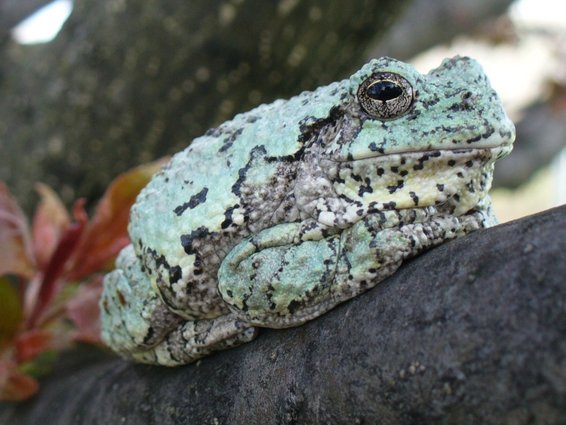
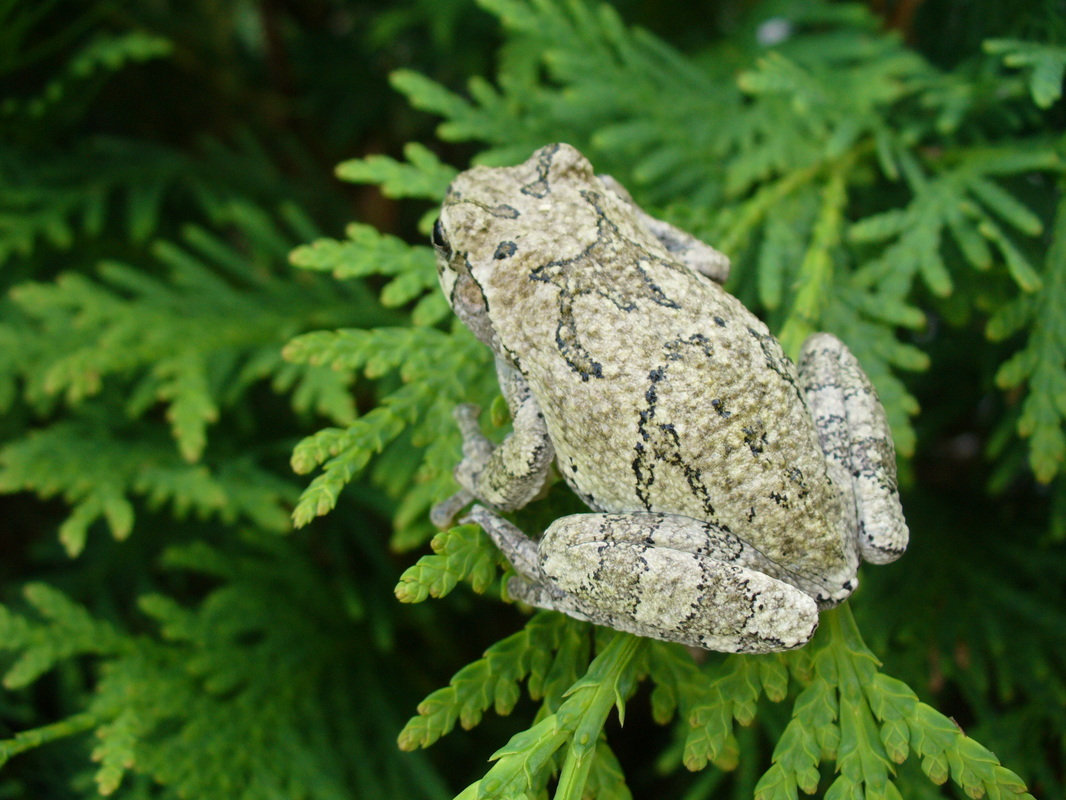
Common Gray Treefrog ​(Hyla versicolor)

Common Gray Treefrog
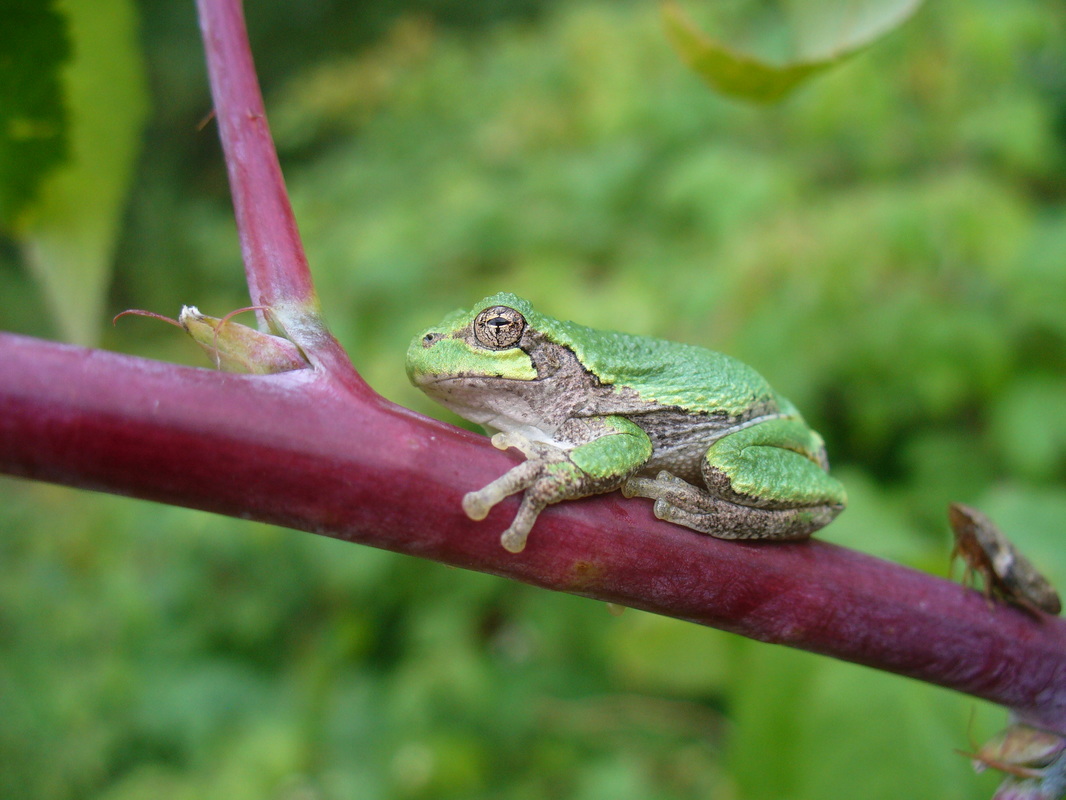
Green Form adult
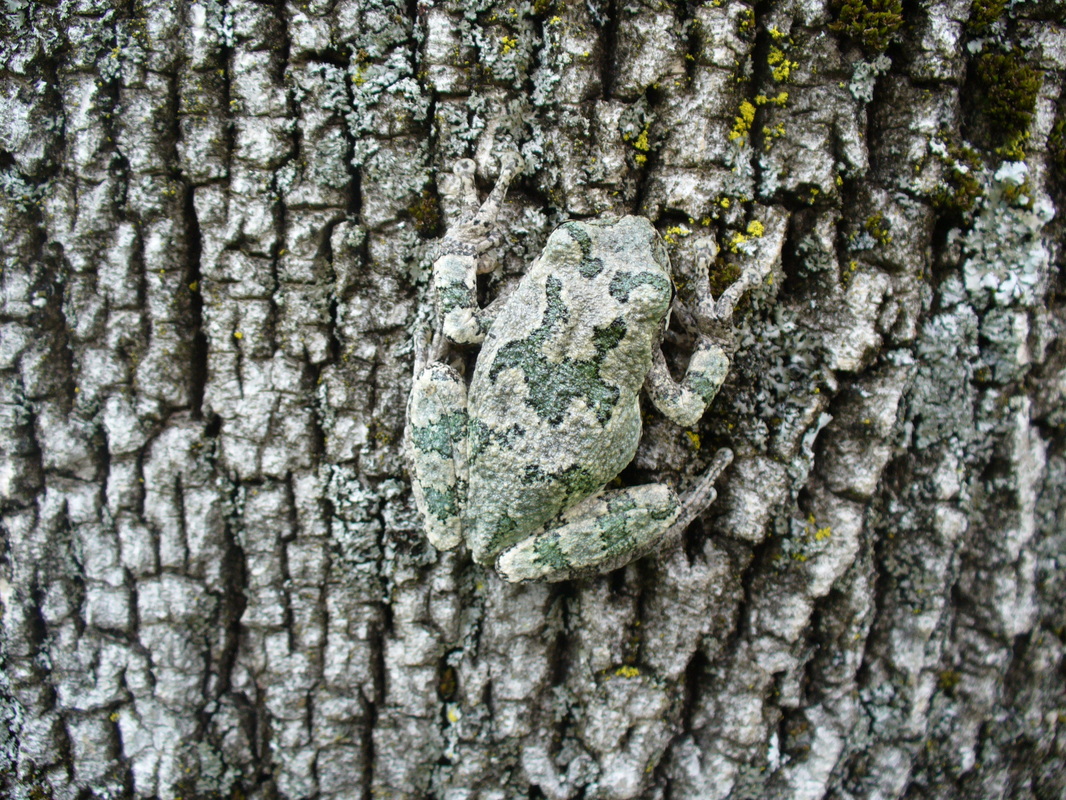
Description: A green or gray frog mottled with black and grays. The underside of the rear legs is orange-yellow. They have adhesive toe pads on their feet that enable them to climb on surfaces. Young tree frogs are usually green with a brown patch on their side, although some are gray. Their skin texture and patterns resemble lichen and tree bark, where they often hide during the day. Skin color slowly changes to match the frog's surroundings.
 

Call: Short trill sometimes accompanied by a chirp given at night, and occasionally during the day.

Eggs: Produces a mass of eggs in a suitable water source, typically swamps or ponds.


Habitat: Deciduous trees and shrubs. Young appear on herbaceous plants more frequently than adults. They often stay in tree cavities, on bark, or in cracks and crevices on houses. These frogs are encountered on roads in spring rain showers.  

​Diet: They feed on insects and spiders. They are much less active in the daytime but frequent windows or houses at night, feeding on insects attracted to artificial lighting.        
Powered by Create your own unique website with customizable templates.