Animals of Northern New York
  • Home
  • Amphibians
    • Frogs and Toads >
      • American Toad
      • American Bullfrog
      • Common Gray Treefrog
      • Green Frog
      • Mink Frog
      • Northern Leopard Frog
      • Pickerel Frog
      • Spring Peeper
      • Wood Frog
    • Salamanders >
      • Blue-Spotted Salamander
      • Eastern Newt
      • Northern Red-Backed Salamander
      • Northern Two-lined Salamander
      • Spotted Salamander
  • Birds
    • Blackbirds >
      • Bobolink
      • Common Grackle
      • Red Winged Blackbird
    • Doves >
      • Mourning Dove
    • Flycatchers >
      • Eastern Phoebe
      • Eastern Kingbird
    • Grosbeaks & Sparrows >
      • American Tree Sparrow
      • Chipping Sparrow
      • Dark-Eyed Junco
      • Northern Cardinal
      • Song Sparrow
      • White-Throated Sparrow
    • Gulls >
      • Ring-Billed Gull
    • Herons >
      • Green Heron
      • Great Blue Heron
    • Jays & Crows >
      • American Crow
      • Blue Jay
    • Mimic Thrushes >
      • Gray Catbird
    • Raptors & Owls >
      • American Kestrel
      • Red-Tailed Hawk
      • Turkey Vulture
    • Swallows >
      • Barn Swallow
      • Tree Swallow
    • Thrushes >
      • American Robin
      • Eastern Bluebird
      • Veery
    • Waterfowl & Gamebirds >
      • Canada Goose
      • Mallard
      • Ruffed Grouse
      • Wood Duck
    • Waxwings >
      • Bohemian Waxwing
      • Cedar Waxwing
    • Wood Warblers >
      • Chestnut Sided Warbler
      • Common Yellowthroat
      • Yellow Warbler
    • Wrens, Woodpeckers & Kin >
      • Black-Capped Chickadee
      • Downy Woodpecker
      • Hairy Woodpecker
      • Northern Flicker
      • House Wren
      • Yellow-bellied Sapsucker
  • Insects & spiders
    • Insects >
      • European Praying Mantis
      • Bees, Wasps, & Ants >
        • Bumble Bees
        • Honey Bee
      • Dargonflies & Damselflies >
        • Eastern Pondhawk
        • Twelve-Spotted Skimmer
      • Flies & Kin >
        • House Fly
        • Green Lacewing
      • Moths & Butterflies >
        • Luna Moth
        • Monarch
        • Mourning Cloak
      • True Bugs >
        • Pale Green Assassin Bug
        • Jagged Ambush Bug
    • Spiders >
      • Banded Garden Spider
      • Black and Yellow Garden Spider
      • Goldenrod Crab Spider
      • Long-bodied Cellar Spider
      • Six-Spotted Orb Weaver
  • Mammals
    • Common Muskrat
    • Eastern Chipmunk
    • Eastern Cottontail
    • North American Porcupine
    • White - Tailed Deer
  • Reptiles
    • Snakes >
      • Eastern Garter Snake
      • Eastern Milksnake
      • Red-Bellied Snake
    • Turtles >
      • Common Snapping Turtle
      • Painted Turtle
  • Glossary
  • Pileated Woodpecker

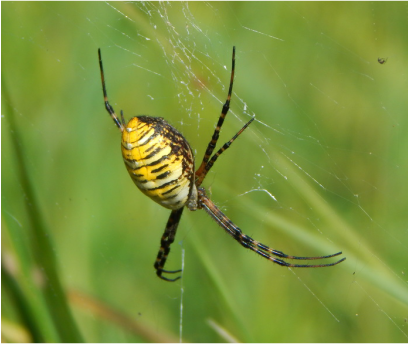
Banded Garden Spider
Picture
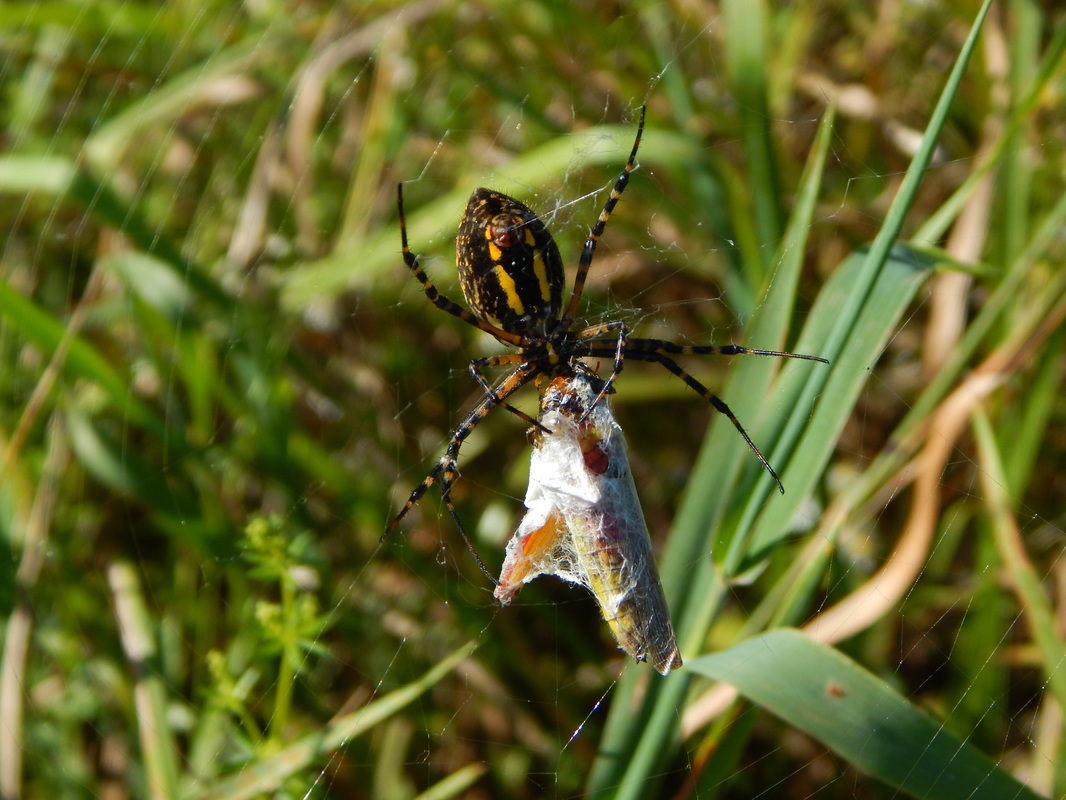
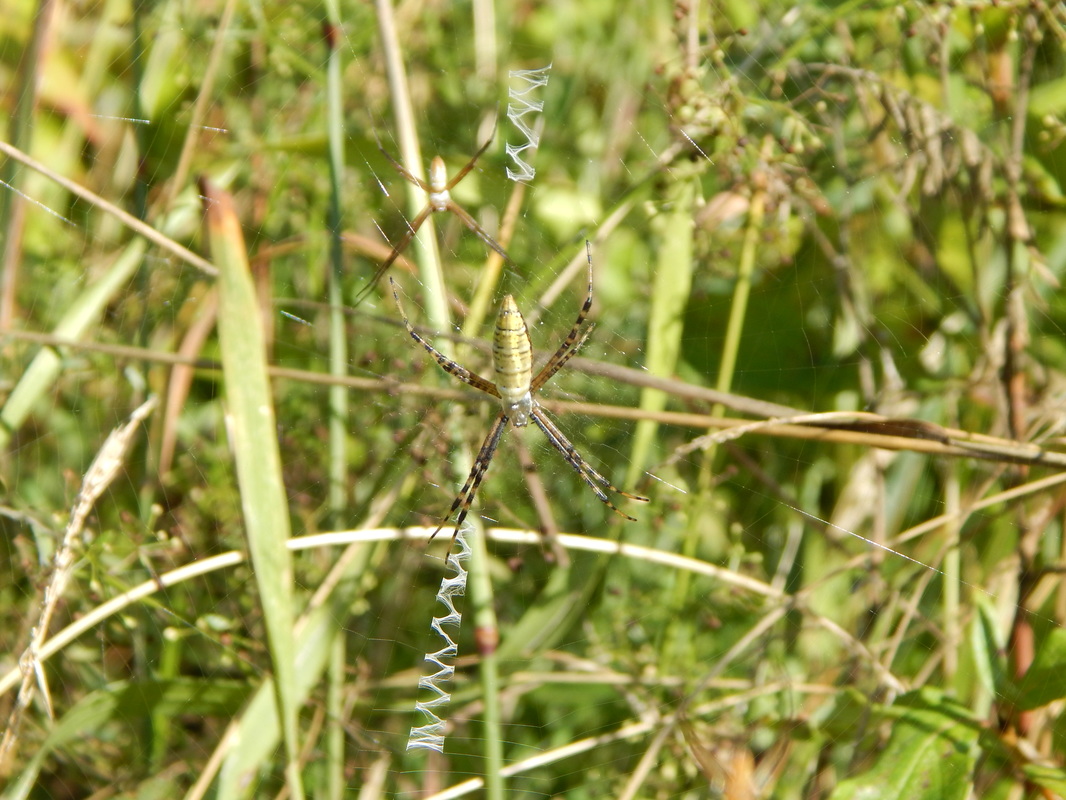
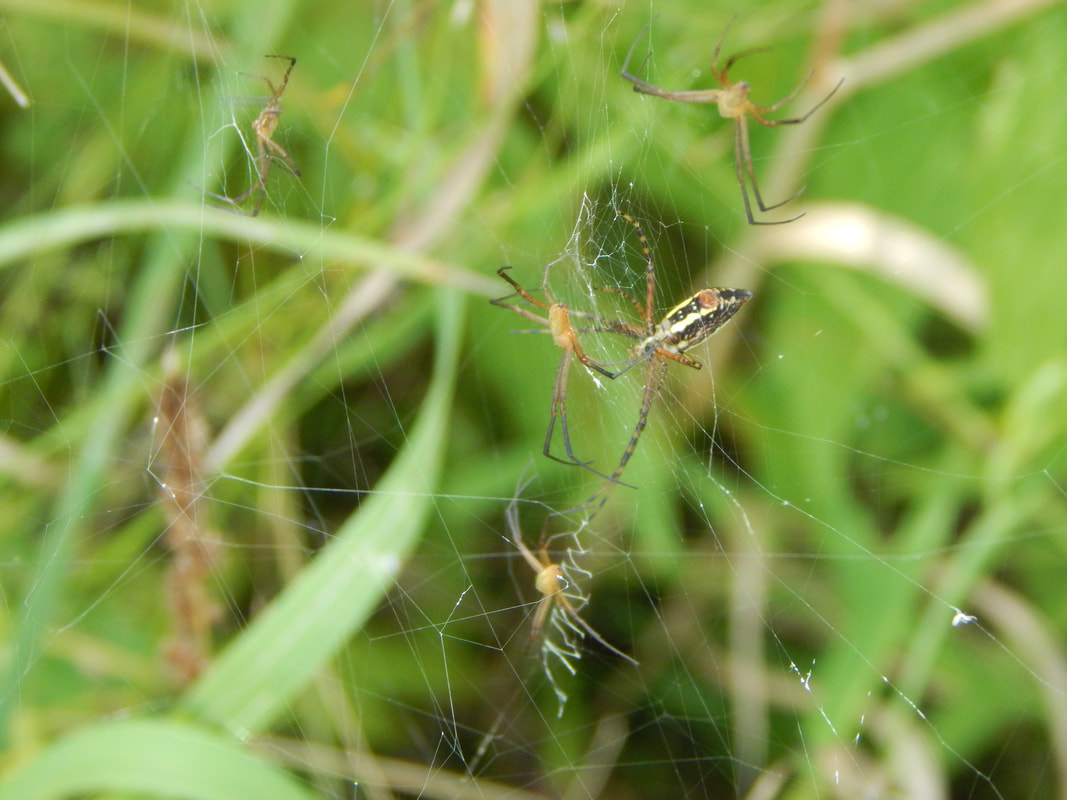
Description: The females of this species are fairly large, like the similar but larger Black and Yellow garden spiders. Males are small, brown, and eat little. They appear in the females web, often several (I've seen as many as five in one web).

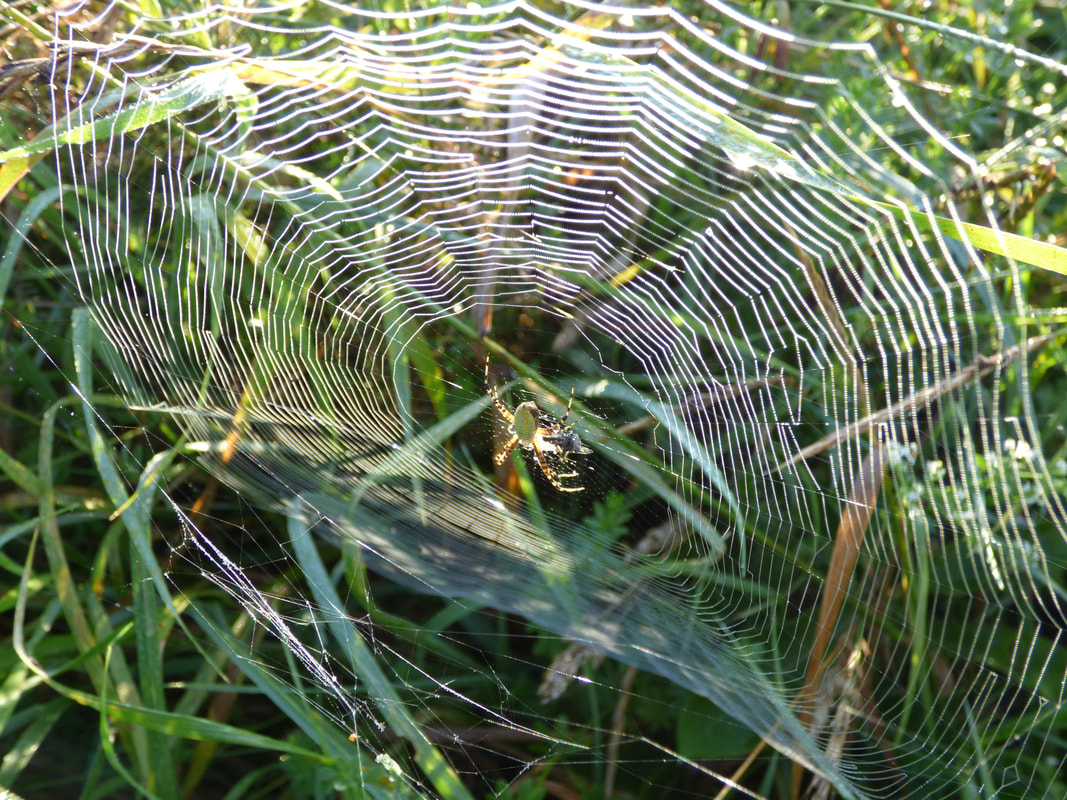
Web: Large orb web, similar to that of the Black and Yellow Garden Spider, sharing the characteristic zigzag pattern radiating from the center. Built between weeds and grasses or shrubs.

Habitat: Grassy or weedy areas such as roadsides, meadows, and gardens. Their numbers are higher in uncut grasslands and at field edges.

Diet: When young, the bulk of their diets is leaf-hoppers and small flying insects. As they mature grasshoppers and larger flying insects such as moths, beetles (frequently captures Japanese Beetles), flies and grasshoppers.

​Eggs: In late September they lay papery egg sacs in foliage usually near their webs.  
 

Powered by Create your own unique website with customizable templates.